

Best small electric car: the 2026 comparison
17 de nov. del 2026
Best small electric car: our guide to electric city cars in 2026
The electric city car segment has changed shape in a year. The Twingo is back in the catalogue as an electric car, the Dacia Spring has moved to a new generation, the Citroën ë-C3 now comes with two battery sizes and Volkswagen has added an ID. Polo to the entry-level offer. Here is the updated comparison, with specifications taken from the manufacturers' official websites. One line of the data sheet deserves particular attention this year, and we come back to it model by model: fast charging, which disappears or becomes an extra on several entry-level versions.
The best electric city cars on the market
Comparison table of range and fast charging
Prices vary from one country to another, and the prices shown in showrooms often include an incentive tied to income or to trading in an old vehicle. We therefore compare technical specifications here, before any incentive or promotional offer. We give the entry version of each model and, for the Spring and the ë-C3, the version that unlocks fast charging, otherwise the table would suggest an equivalence that does not exist.

Model | Battery | WLTP range | Fast charging |
Dacia Spring essential | 24.3 kWh | 225 km | not available |
Dacia Spring extreme | 24.3 kWh | 225 km | 40 kW optional |
Renault Twingo E-Tech evolution | 27.5 kWh | 263 km | 50 kW optional |
Citroën ë-C3 You urban range | 30 kWh | 213 km | 30 kW optional |
Citroën ë-C3 You comfort range | 44.2 kWh | 328 km | 100 kW standard |
Renault 5 E-Tech five | 40 kWh | 312 km | not available |
Volkswagen ID. Polo Trend | 37 kWh | 323 km | 88 kW standard |
Peugeot e-208 Style | 50 kWh | up to 363 km | 100 kW standard |
Opel Corsa Electric Edition | 50 kWh | 356 km | not disclosed |
MG4 Premium | 64 kWh | 452 km | not disclosed |
Sources: official websites and documentation of the manufacturers, consulted on 14 September 2026. Specifications exclude public incentives and promotional offers; options are marked as such.
Born electric or electric versions of existing models: a distinction that matters
One dividing line appears on no data sheet, yet it is worth knowing. The Twingo E-Tech, the Dacia Spring, the Renault 5, the ID. Polo and the MG4 were designed from the outset as electric cars, on platforms that accept nothing else. The ë-C3, the e-208 and the Corsa Electric share theirs with petrol and hybrid versions.
That disqualifies nobody, and the last three are benchmarks of the segment. But a dedicated platform gives more freedom over battery placement, and therefore over cabin space and boot volume for the same footprint. A criterion to weigh up during the test drive, rather than when reading the table.
Renault Twingo E-Tech: the return of a real city car
This is the new arrival that reshuffles the cards at the bottom of the range. The Twingo returns as a 100% electric car in its Evolution trim, with a 27.5 kWh LFP battery and 263 km of WLTP range. The format remains the one that made the model a success: very short, very manoeuvrable, designed for the city above all.
One point deserves attention when ordering: DC fast charging is not fitted as standard. It comes with the advanced charge pack, a paid option, which opens charging at 50 kW and adds the 11 kW AC charger. Without this pack, the car can only charge on AC, which is enough for a night in the garage but rules out any quick top-up. For strictly urban use, saving the money makes sense. As soon as longer trips enter the picture, this option is the best money spent on the order form.
Dacia Spring: new generation, three trims
The Spring has moved to a new generation. Three trims are in the catalogue: essential, expression and extreme, all with the same 24.3 kWh usable battery and 225 km of WLTP range. It is one of the most affordable new electric cars in the segment.
The trade-off shows in the options list. DC fast charging, capped at 40 kW, is only available on the extreme trim, through an optional pack. On essential and expression it is neither standard nor optional: these two versions can only charge on AC. A decisive detail if you plan to leave the city even occasionally.
Citroën ë-C3: two batteries, two uses
The ë-C3 comes with two batteries, which Citroën calls urban range and comfort range. The You trim in urban range offers 30 kWh and 213 km of WLTP range, and its 30 kW fast charging is a paid option: without it, there is no DC charging at all. The same You trim in comfort range offers 44.2 kWh, 328 km and 100 kW charging fitted as standard. Above that, the Plus and Max trims are offered in comfort range.
The price difference between the two batteries of the same trim therefore buys more than 115 km of extra range: it takes the car from an optional top-up charge to genuinely fast charging fitted as standard. On a long trip, 30 kW and 100 kW are not in the same league, and we would look at this point before any other.
Renault 5 E-Tech: style and versatility
The Renault 5 starts in the five trim, with a 40 kWh battery and 312 km of WLTP range. The neo-retro design did a lot for its reputation, but it is its overall balance that makes it recommendable: decent interior space, a usable boot, polished road behaviour.
One major reservation about this entry trim: DC fast charging is not included, and cannot be added. It appears from the evolution trim upwards. Anyone planning to leave the city should therefore aim for that version, or look elsewhere.
Volkswagen ID. Polo: the arrival that shifts the balance of power
Volkswagen has published its price list for the ID. Polo, which opens with the Trend trim, with 37 kWh net, 323 km of WLTP range and 88 kW DC charging fitted as standard. That is the point that sets it clearly apart at this level of the range: its direct rivals top out lower, when they do not charge extra for fast charging. The range then rises to 52 kWh and 453 km of range.
How to choose your small electric car according to your needs
Range: start from your trips, not from the WLTP figure
For exclusively urban and suburban use, 200 to 250 km of range comfortably covers the week, with a recharge at the weekend. The Dacia Spring, the Twingo E-Tech and the ë-C3 in urban range are cut out for this profile, and their price reflects it.
As soon as trips of more than 150 km come up regularly, the reasoning shifts to the charging power the car accepts, which determines the length of each stop. A city car at 100 kW recovers in twenty minutes what a 30 kW car will take more than an hour to regain, at equal capacity. Few buyers pay attention to it at the dealership, and many regret it on the first long trip.
Budget: the displayed price is not the price paid
On this segment, the price shown in showrooms often includes an incentive or a current offer. In many countries, purchase incentives for electric vehicles exist, in varying forms and amounts: it is best to check the schemes in force in your country at the time of purchase, with official sources.
In use, an electric city car consumes between 12 and 15 kWh per 100 km in town, and maintenance is structurally lighter, with no oil change, no timing belt and no clutch.
Equipment: look at the heat pump before the screen
On a small battery, one piece of equipment weighs more than all the others: the heat pump. In winter, a conventional electric resistance heater consumes noticeably more than a heat pump to warm the cabin, and on 25 to 30 kWh the difference shows from the first cold trip. Check it on the order form, right after the fast charging line.
The best deals for buying your electric city car
Subsidised leasing: schemes specific to each country
In several countries, subsidised leasing schemes give access to an electric city car for a capped monthly rent, subject to income conditions. Their timing, caps and conditions vary from market to market, and the available budgets can run out before the planned closing date: check with the official sources in your country.
Used: check the battery's state of health
Depreciation on first-generation models makes some of them very affordable. One checkpoint takes priority over the others: the battery's state of health, as a percentage of its original capacity. Ask for the report, and check the remaining warranty, generally eight years or 160,000 km. Our selection of the best used electric cars reviews the models that go the distance best.
Long-term leasing: read the first rental line
The monthly payments advertised often rely on a first rental increased by several thousand euros, or include an incentive tied to income. The only comparable figure is the total cost of the contract, deposit and fees included, divided by the number of months. Our guide to electric car offers with no deposit details the method and the pitfalls.
Charging and real-world range of electric city cars
At home, on the network, and the nuance that matters
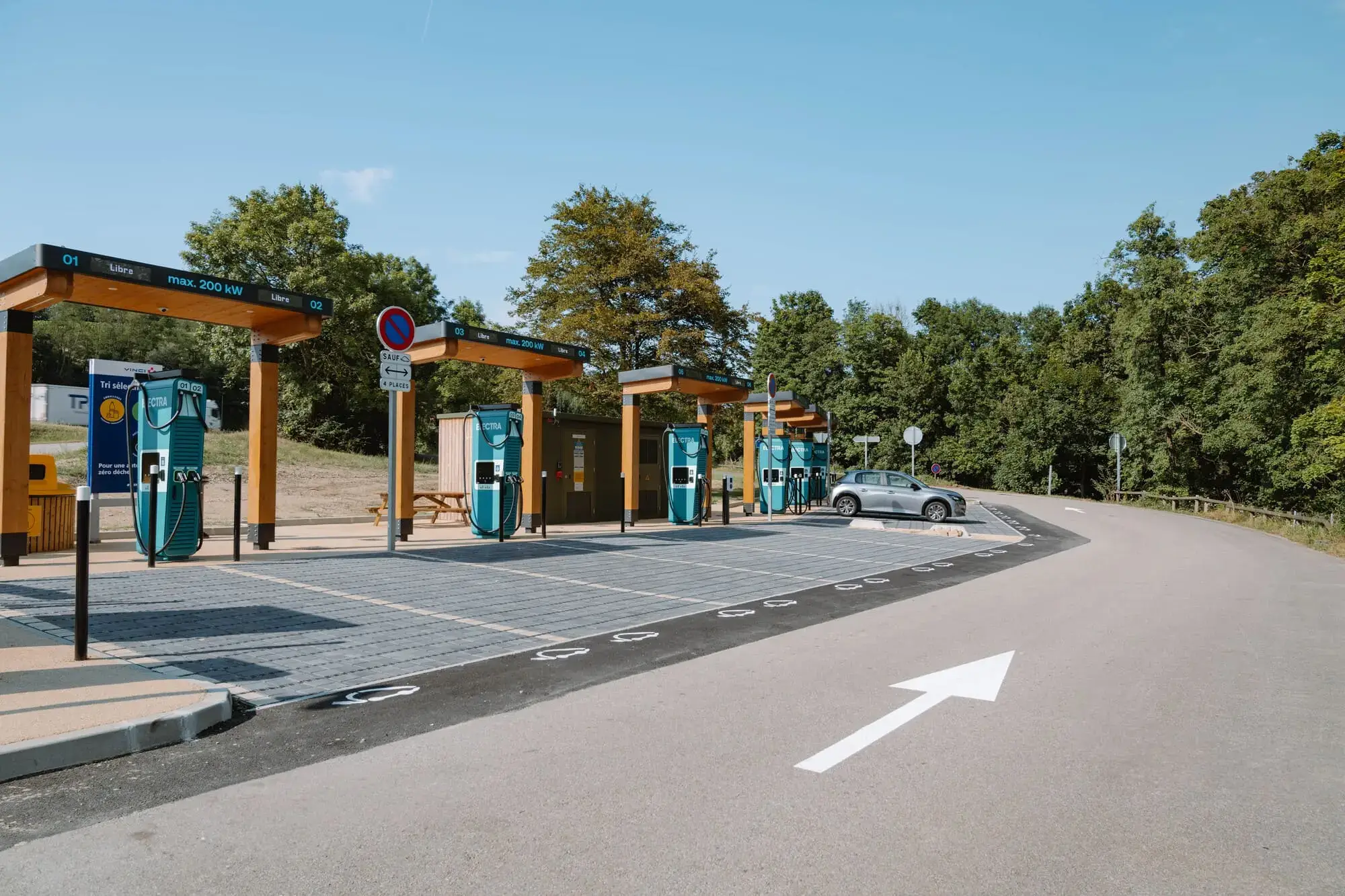
A 7 kW wall box fully recharges a city car battery overnight, and this mode covers most needs for anyone with private parking. For longer trips, our fast charging stations deliver up to 400 kW, which lets each car charge at the maximum power it accepts, without ever being limited by the infrastructure. On a city car limited to 100 kW, that means a 20 to 80% charge in about twenty minutes.
The Electra station map lists the sites of the network, and with Autocharge the session starts as soon as you plug in. The Electra+ subscription reduces the price per kilowatt hour, with no commitment:
Electra+ Essential: €1.99/month with no commitment, €0.10/kWh discount on every charge on the Electra network.
Electra+ Smart: €4.99/month with no commitment, €0.20/kWh discount on every charge on the Electra network.
Real consumption and winter loss
In town, an electric city car runs at around 13 kWh per 100 km: it is its best territory, with regenerative braking working constantly. On the motorway and in winter, real range moves away from the WLTP value, a gap that the heat pump and preheating while charging limit without eliminating. The details of Electra charging prices are available online.
Our verdict: which is the best electric city car?
For the tightest budget, the Dacia Spring essential and the Renault Twingo E-Tech compete for the entry level, the second offering superior driving pleasure and finish, the first the lowest entry price. Beware, though: on the Spring, fast charging means moving up to the extreme trim, while the Twingo offers it as an option from the entry level.
For the best compromise, the Citroën ë-C3 You in comfort range and the Volkswagen ID. Polo hold the inside track, both with fast charging as standard. The Renault 5 E-Tech remains the choice of those who want a desirable object, provided they aim for the evolution trim to get fast charging. And for range, the MG4 and its 452 km step outside the strict city car frame, as does its price.
Frequently asked questions about small electric cars
What is the cheapest small electric car in 2026?
The Dacia Spring, in the essential trim, before incentives. The Renault Twingo E-Tech and the Citroën ë-C3 You in urban range follow.
What range does an electric city car need for urban use?
Between 200 and 250 km comfortably covers a week of urban and suburban trips on a single charge. Beyond that, the charging power the car accepts becomes the deciding criterion.
How long does it take to charge a small electric car?
Overnight on a 7 kW wall box at home. At a fast charging station, about twenty minutes to go from 20 to 80% on a model that accepts 100 kW, noticeably longer on a model limited to 30 kW.
Is the electric Renault Twingo on sale as a new car again?
Yes. The new generation, 100% electric, is back in the catalogue in the evolution trim, with a 27.5 kWh battery and 263 km of WLTP range. Fast charging remains a paid option.
The key takeaways
The segment has widened at the bottom with the return of the Twingo E-Tech and the new Dacia Spring, and has strengthened in the middle with the arrival of the Volkswagen ID. Polo. On these small batteries, two lines of the data sheet matter more than the advertised range: the charging power accepted, missing or charged as an option on several entry-level versions, and the presence of a heat pump. Showroom prices are frequently reduced by a conditional incentive, and vary from one country to another.
To find Electra stations near you, download the app on the App Store or Google Play.
Written by Nicolas, Electra mobility expert
The only charging app you will need
4.5/5
on the stores